How to Choose Kitchen Cabinets That Hold Up to Florida Humidity
Florida humidity is hard on cabinets. Months of muggy air, steam from cooking, and the occasional leak under the sink all test the materials your cabinets are made from. Some cabinets handle it for decades. Others start to swell, peel, sag, or stick within a few years. The difference usually comes down to what the cabinet boxes are built from, how the doors are finished, and how carefully the cabinets are installed. Knowing what to look for before you buy can save you from replacing cabinets far sooner than you planned.
This guide explains how humidity affects cabinets, which materials hold up best in North Florida, where moisture damage usually starts, and how to protect your cabinets for the long haul.
Humidity causes cabinet materials to absorb moisture, which can make wood swell and move and can permanently swell particleboard. For North Florida kitchens, plywood boxes, quality finishes on every surface, and moisture-aware installation hold up best. The sink base is where damage most often starts, so it deserves the most attention.
Key Takeaways
- Humidity makes cabinet materials absorb moisture, causing swelling, warping, peeling finishes, and sticking doors.
- Plywood boxes handle moisture better than particleboard, which swells permanently once it gets wet.
- Finishes matter as much as materials, because unsealed edges and backs let moisture in.
- The sink base is the most vulnerable spot, where slow leaks quietly ruin cabinet floors.
- Installation and indoor humidity control protect cabinets, keeping them level, sealed, and dry for years.
How Does Humidity Affect Kitchen Cabinets?
Humidity affects cabinets because wood and wood-based materials absorb moisture from the air. As they absorb and release moisture, they expand and contract. Over time this can cause swelling, warping, cracked paint at joints, peeling finishes, and doors that stick or no longer close evenly. Engineered materials like particleboard can swell permanently when exposed to water.
The problem is not one humid day. It is the long, repeated cycle that North Florida homes go through every year.
How moisture shows up in cabinets:
- Wood moves. Solid wood expands in humid months and shrinks when the air conditioning dries the house out. Doors and face frames shift slightly with the seasons.
- Finishes crack and peel. As wood moves, paint can crack at the joints of painted doors, and finishes can lift where moisture gets underneath.
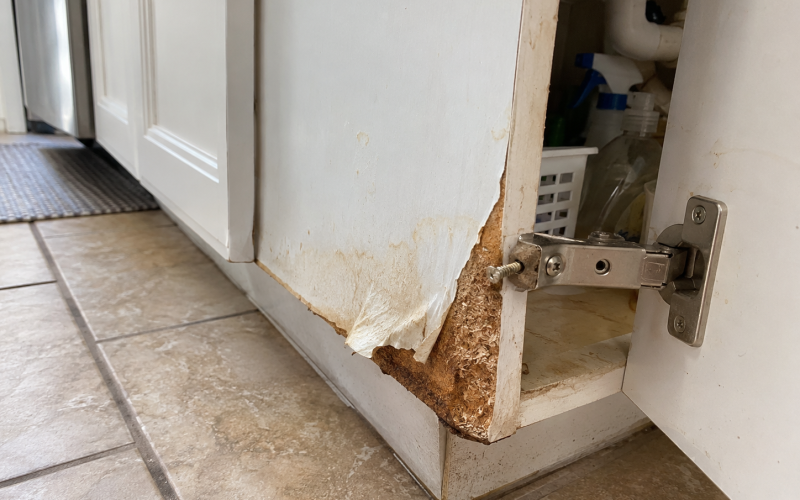
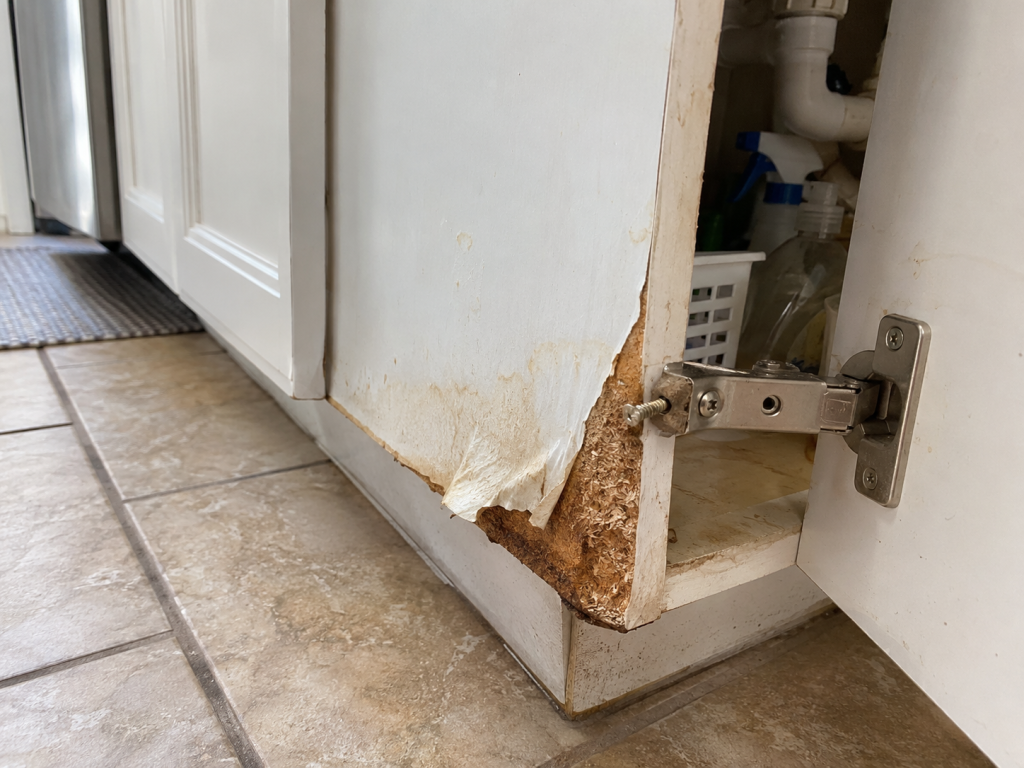
- Engineered boards swell. Particleboard and low-grade fiberboard absorb water at exposed edges and swell. That swelling does not go back down.
- Hardware loosens. Swollen or softened material holds screws poorly, so hinges sag and doors drift out of alignment.
None of this means wood cabinets are a bad idea in Florida. It means material choice, sealing, and installation matter more here than in drier climates. Well-built cabinets that are properly installed and kept in a climate-controlled home perform beautifully for decades.
Which Cabinet Materials Hold Up Best in Florida?
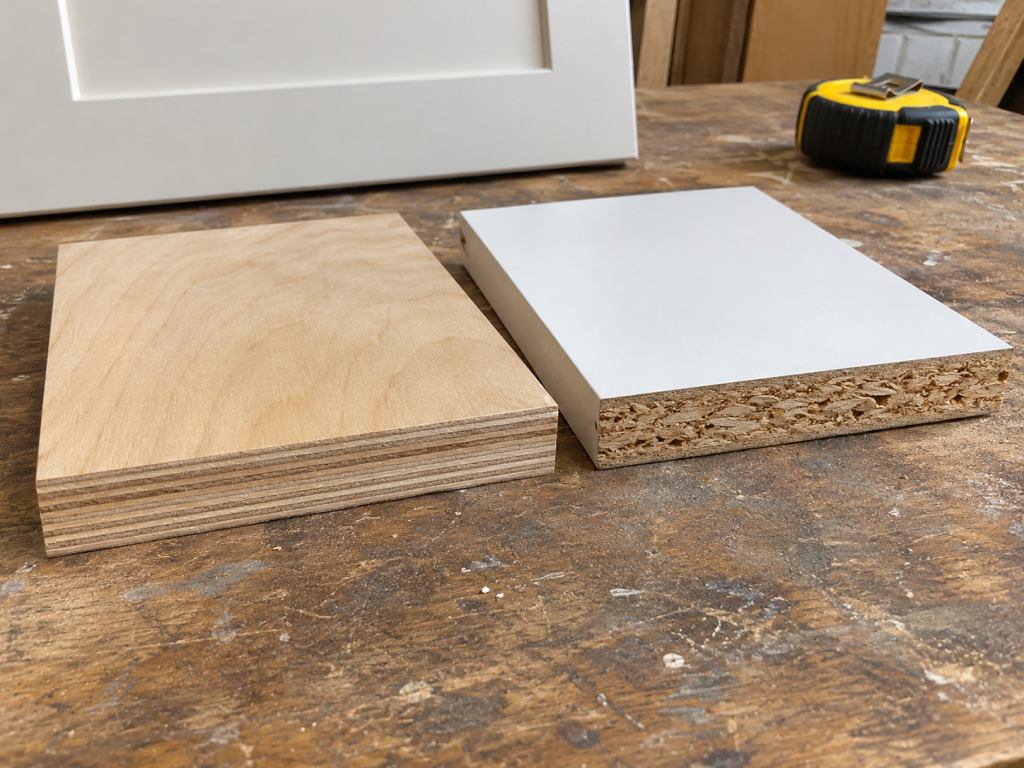
Plywood is generally the best choice for cabinet boxes in humid climates because its cross-layered construction resists swelling and holds screws well. MDF is a stable choice for painted doors when it is fully sealed. Particleboard is the most vulnerable to moisture, since it swells permanently once water reaches it. Solid wood works well for doors and face frames when finished properly.
Each material has a place, and the best cabinets often combine them.
Each material has a place, and the best cabinets often combine them.
What to look for when comparing cabinets:
- Box construction. Ask what the boxes, floors, and backs are made of. Plywood boxes are a strong choice for Florida kitchens, especially at the sink base.
- Finish coverage. Quality cabinets are finished on all sides, including edges and interiors, so moisture cannot sneak in through raw material.
- Door style. Painted doors look great but show joint movement. Many homeowners choose MDF center panels or quality finishes to reduce cracking.
- Hardware. In coastal homes near Crawfordville, St. Marks, and Shell Point, corrosion-resistant hinges and pulls hold up better in salt air.
The goal is not the most expensive cabinet. It is the right construction for the spots in your kitchen that see the most moisture.
Where Does Moisture Damage Usually Start?
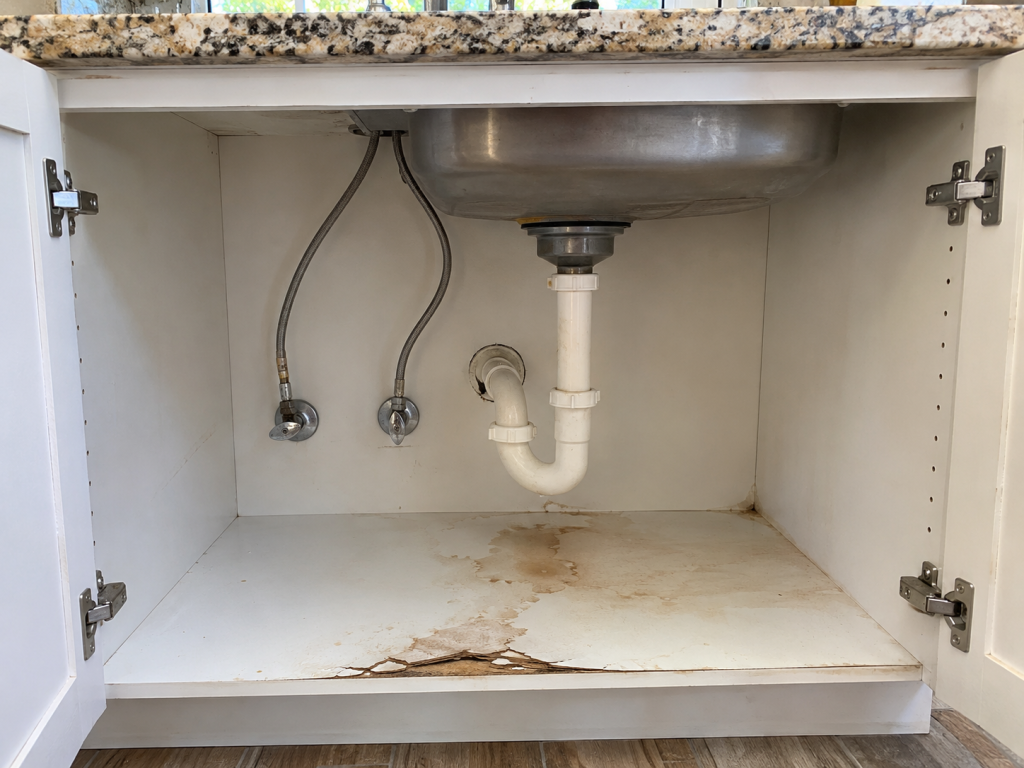
Moisture damage usually starts at the sink base, around the dishwasher, beside the range, and near exterior walls. These areas see direct water, steam, or temperature differences that push moisture into cabinet materials. Slow plumbing leaks under the sink are the most common cause of ruined cabinet floors.
Knowing the hot spots helps you choose materials and catch problems early.
The most common trouble spots:
- The sink base. Slow drips from supply lines, drains, and garbage disposals soak the cabinet floor. In particleboard cabinets, the floor swells and crumbles, often before anyone notices.
- Next to the dishwasher. Hot, steamy air escapes when the dishwasher opens, and it hits the edges of neighboring cabinets and the countertop underside.
- Around the range. Steam from cooking rises into upper cabinets and the range hood area.
- Exterior walls and bathrooms. Cabinets on exterior walls can see condensation, and bathroom vanities face daily steam from showers.
These are also the places where installation details matter most. Proper clearances, sealed cutouts, and secure plumbing connections all reduce how much water reaches cabinet materials in the first place. That attention to detail is part of professional kitchen cabinet installation and bathroom cabinet installation.
How Can You Protect Cabinets From Humidity?
You can protect cabinets by choosing moisture-tolerant materials, making sure every surface is finished, installing them level and secure, keeping indoor humidity under control, and fixing leaks quickly. A good range hood and bathroom fan also cut down the steam that reaches cabinet surfaces.
Most cabinet moisture problems can be prevented with a few habits and good choices up front.
Simple ways to protect your cabinets:
- Control indoor humidity. Run your air conditioning consistently and consider a dehumidifier in damp homes. The EPA recommends keeping indoor humidity below 60 percent, ideally between 30 and 50 percent.
- Vent steam. Use the range hood while cooking and the bathroom fan during and after showers.
- Check under the sink. Look for drips a few times a year, and fix leaks right away before the cabinet floor absorbs water.
- Wipe up water. Dry spills and splashes on cabinet doors and edges, especially near the sink and dishwasher.
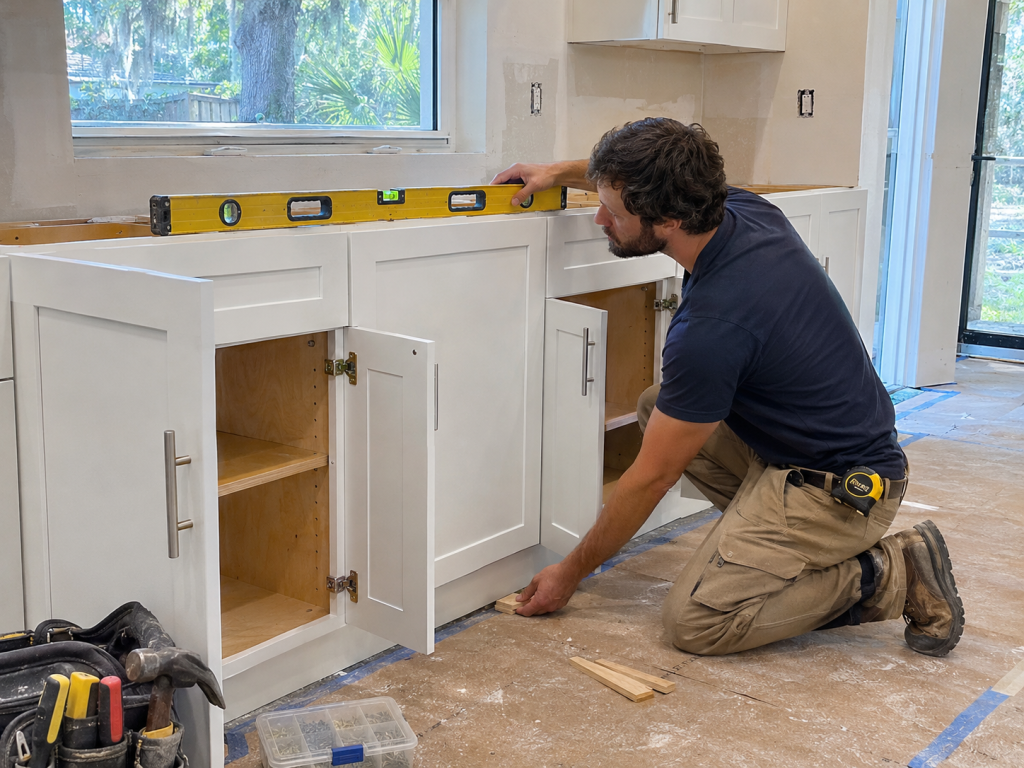
- Start with a solid install. Level, square, securely fastened cabinets keep doors aligned and joints tight, which helps finishes stay intact.
Together, these steps keep cabinets looking new and working smoothly through many North Florida summers.
Get Cabinets Built for North Florida From Streamline Cabinetry
Humidity is a fact of life in Tallahassee and along the Gulf coast, and it is one of the biggest reasons cabinets fail early. Choosing moisture-tolerant materials, sealing every surface, protecting the sink base, and installing cabinets level and secure are what separate cabinets that last a few years from cabinets that last decades.
Streamline Cabinetry is a family-owned Tallahassee company with more than a decade of experience in cabinet fabrication and installation. We design and install custom kitchen cabinets and bathroom vanities for homeowners, builders, and property managers throughout Tallahassee, Wakulla County, Gadsden County, and South Georgia, built for Florida’s climate and daily use.
Every kitchen has its own layout, moisture risks, and style goals, so the right cabinets start with a visit. Contact Streamline Cabinetry for a free consultation, and ask about cabinet financing options.
Frequently Asked Questions