Quartz vs. Granite Countertops: Which Is Right for Your North Florida Kitchen?
Quartz and granite are the two most requested countertop materials in Tallahassee and the surrounding area, and both are excellent choices. They are durable, attractive, and built to handle daily kitchen use for decades. But they are not the same material, and the differences matter more in North Florida than many homeowners expect. Humidity, coastal salt air, heavy daily cooking, and outdoor living spaces all affect which surface performs best in a given home. Choosing well comes down to how you use your kitchen and how much maintenance you want to take on.
This guide explains what quartz and granite are, how they compare on durability and upkeep, which holds up best in North Florida conditions, and how to decide between them.
Quartz is an engineered stone made mostly of ground natural quartz bound with resin, so it is nonporous and never needs sealing. Granite is a natural stone quarried in solid slabs, so every piece is unique, it handles heat very well, and it needs periodic sealing. For most North Florida kitchens, quartz offers the lowest maintenance, while granite offers one-of-a-kind character and better heat tolerance.
Key Takeaways
- Quartz is engineered and nonporous, so it resists stains and never needs sealing.
- Granite is natural stone, so every slab has unique color and movement, and it should be sealed periodically.
- Granite handles heat better, while quartz resin can scorch or discolor under hot pans.
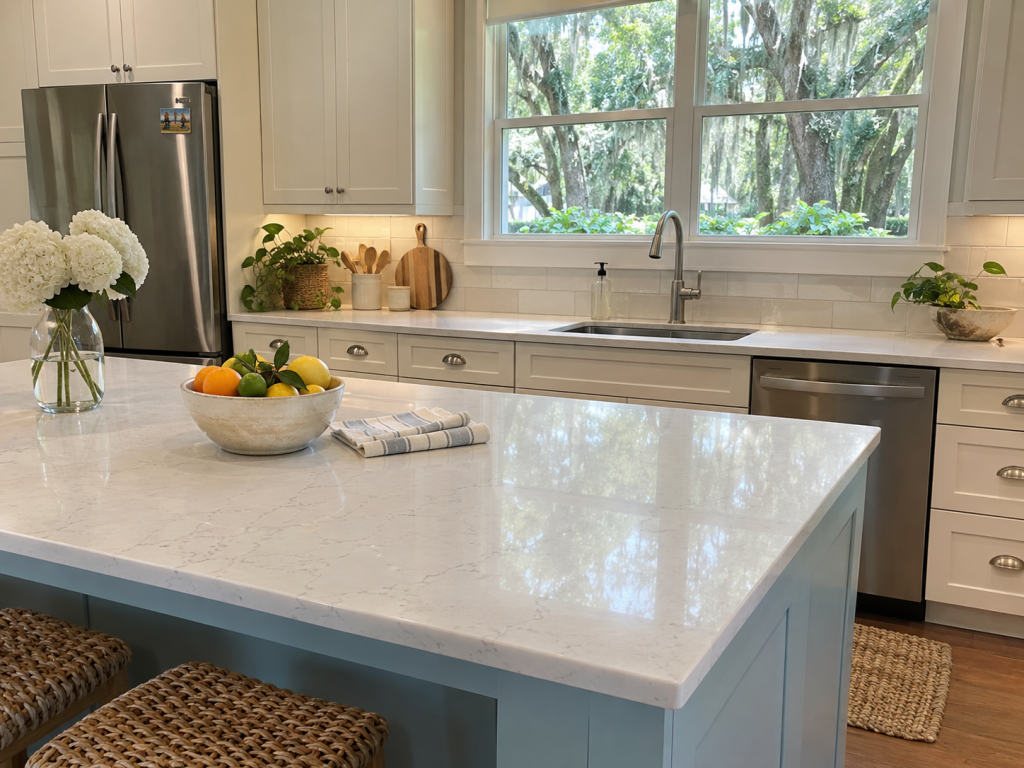
- Quartz handles humidity and spills with the least upkeep, which is why it is a popular recommendation for coastal and high-use kitchens.
- Both depend on a precise install, because level cabinets and accurate templating decide how well any stone countertop performs.
What Is the Difference Between Quartz and Granite?
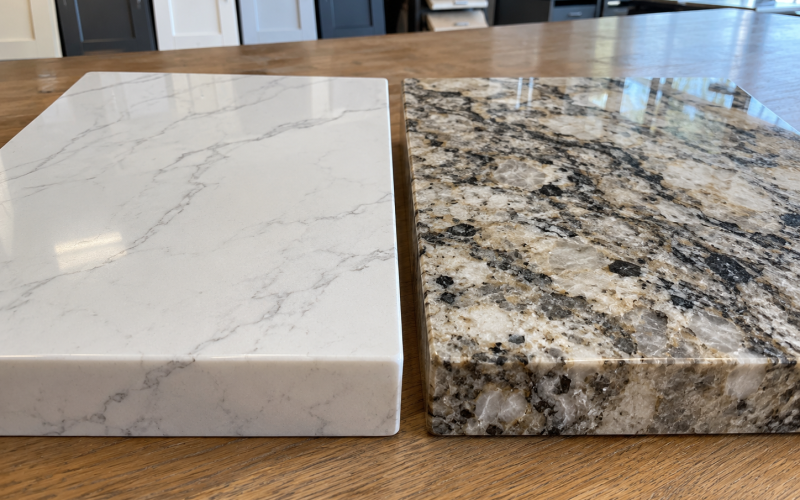
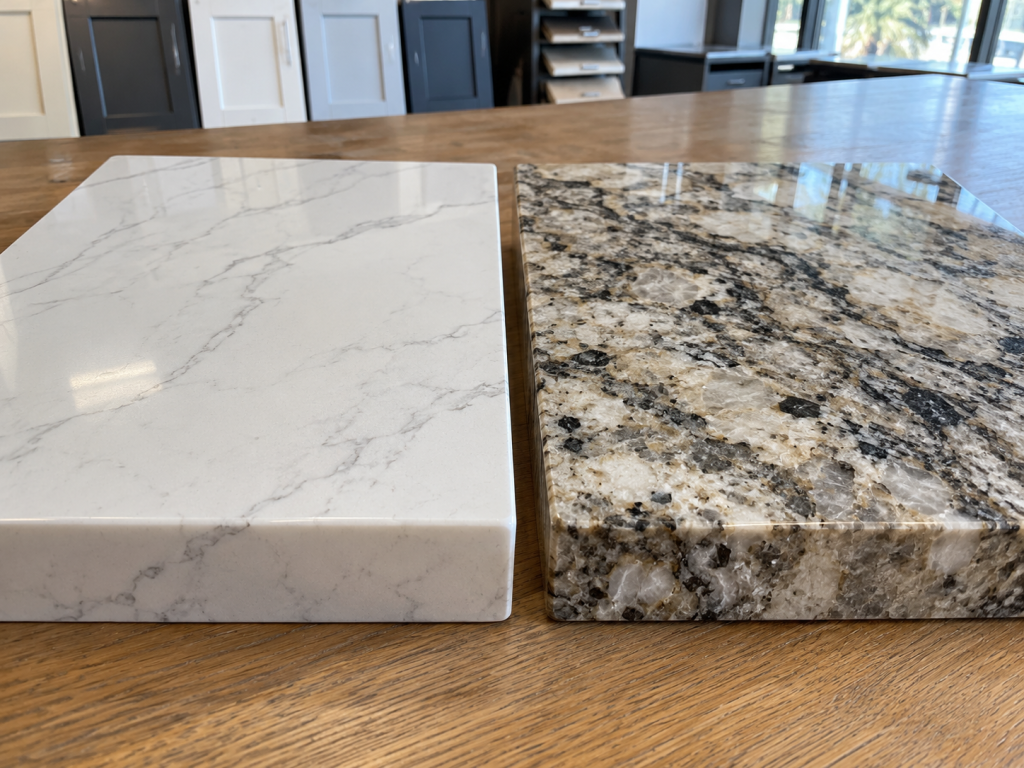
The main difference is how they are made. Granite is a natural stone cut from quarries in solid slabs, while quartz is an engineered stone made mostly of crushed natural quartz mixed with resins and pigments. That difference shapes everything else, from appearance and consistency to porosity, maintenance, and heat resistance.
Understanding where each material comes from makes it easier to see why each behaves the way it does.
How the two materials differ:
- Granite is formed by nature. It is an igneous rock cut directly from the earth, polished, and installed. No two slabs are identical.
- Quartz is manufactured. Ground quartz is combined with a resin binder and pressed into slabs, which allows for consistent patterns and colors, including convincing marble looks.
- Granite has natural pores. Like most natural stone, granite can absorb liquids if it is not sealed, though density varies from slab to slab.
- Quartz is nonporous. The resin fills the spaces between the quartz particles, so liquids stay on the surface.
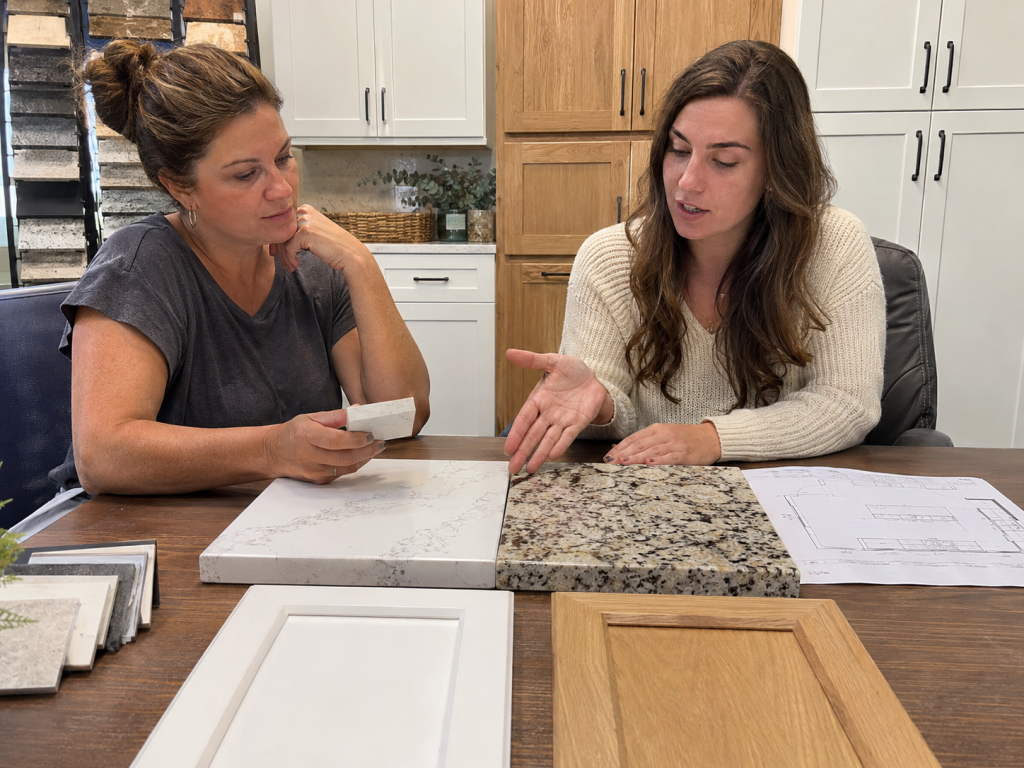
That last point drives most of the practical differences. Because quartz does not absorb liquids, it resists staining and bacteria without any sealing routine. Granite trades a little more maintenance for the natural depth and individuality that only real stone can offer. Neither is “better” across the board, which is why seeing slabs in person and talking through how you cook and clean is part of every countertop installation consultation.
How Do Quartz and Granite Compare on Durability and Maintenance?
Both materials are highly durable and scratch-resistant for normal kitchen use. Quartz needs less maintenance because it is nonporous and never needs sealing, while granite should be sealed periodically to protect against stains. Granite tolerates heat better, while quartz can be damaged by hot pans placed directly on the surface.
Here is how the two compare side by side.
The differences that matter most day to day:
- Daily upkeep. Quartz cleans with mild soap and water and that is the whole routine. Granite cleans the same way but benefits from resealing on a schedule so oils, wine, and coffee do not soak in.
- Heat. Granite shrugs off a hot pot. Quartz resin can scorch, yellow, or crack from sudden high heat, so trivets are a must.
For busy households that want a surface they can wipe down and forget, quartz usually wins. For serious cooks who move hot pans around constantly, granite’s heat tolerance is a real advantage.
Factor | Quartz | Granite |
|---|
Material | Engineered stone (quartz + resin) | Natural stone |
Sealing | Never needed | Periodic sealing recommended |
Stain resistance | Excellent, nonporous | Good when sealed |
Heat resistance | Moderate; use trivets | Excellent |
Scratch resistance | Excellent | Excellent |
Appearance | Consistent color and pattern | Unique, natural variation |
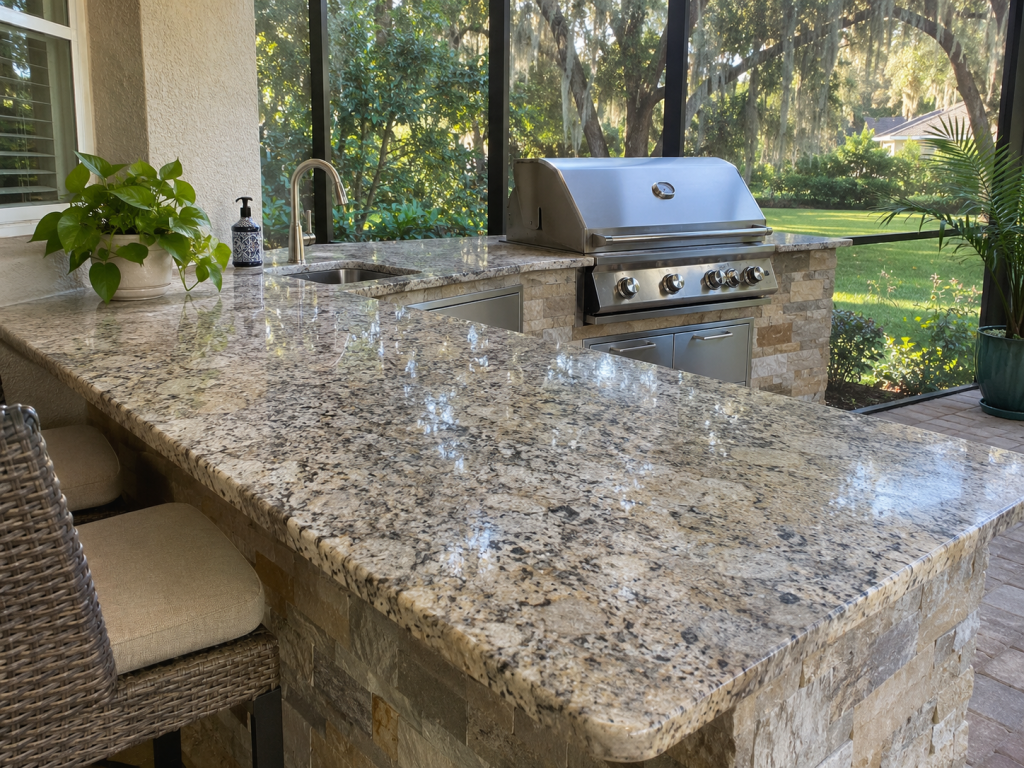
Outdoor use | Not recommended (UV can fade resin) | Well suited |
The differences that matter most day to day:
- Daily upkeep. Quartz cleans with mild soap and water and that is the whole routine. Granite cleans the same way but benefits from resealing on a schedule so oils, wine, and coffee do not soak in.
- Heat. Granite shrugs off a hot pot. Quartz resin can scorch, yellow, or crack from sudden high heat, so trivets are a must.
For busy households that want a surface they can wipe down and forget, quartz usually wins. For serious cooks who move hot pans around constantly, granite’s heat tolerance is a real advantage.
Which Countertop Holds Up Best in North Florida?
For most North Florida kitchens, quartz is the easiest to live with because it is nonporous and unaffected by humidity. Granite performs very well too when sealed on schedule. For outdoor kitchens, granite is the stronger choice because sunlight can fade or discolor the resin in quartz over time.
North Florida’s climate puts specific demands on any countertop.
What to consider locally:
- Humidity and moisture. Tallahassee summers are long and humid, and kitchens see steam, spills, and condensation. A nonporous surface like quartz does not care about any of it.
- Coastal homes. In Wakulla County and along the coast, salt air and moisture make low-maintenance surfaces especially appealing. Quartz is a common recommendation for these homes.
- Outdoor kitchens and lanais. Direct sun is hard on resin-based surfaces. Granite holds its color outdoors and handles heat from grills.
- The cabinets underneath. Stone is heavy and unforgiving. Builder-grade cabinets that are slightly out of level will cause problems for any slab, so the cabinet base matters as much as the stone.
The right answer often depends on the room. Many homeowners choose quartz for the kitchen and a bathroom vanity top, and granite for an outdoor kitchen. If you are unsure, a quick look at the space and how you use it usually makes the choice clear.
How Do You Choose Between Quartz and Granite?
Choose quartz if you want the lowest maintenance, a consistent look, and maximum stain resistance. Choose granite if you want a one-of-a-kind natural slab, better heat tolerance, or an outdoor-ready surface. Your cooking habits, design style, and willingness to reseal should drive the decision.
A few simple questions usually settle it.
Ask yourself:
- How do you cook? If hot pans go straight from the stove to the counter, lean toward granite.
- How much maintenance do you want? If the answer is “none,” lean toward quartz.
- What look are you after? For a uniform modern look or a marble appearance without marble’s upkeep, quartz delivers. For natural movement and character, granite does.
- Is it indoors or outdoors? Outdoors, choose granite.
Whichever you choose, the installation decides how well it performs. Accurate templating to your actual cabinets, level support, clean seams, and properly prepared sink and cooktop cutouts are what turn a beautiful slab into a countertop that lasts. That is the core of professional kitchen cabinet installation and countertop work done together.
Find the Right Countertop With Streamline Cabinetry
For homeowners looking for a dependable Tallahassee cabinet contractor, Streamline Cabinetry has built a reputation for honesty and craftsmanship.
Instead of treating kitchen remodeling like a high-pressure sales process, Streamline Cabinetry focuses on helping homeowners make informed decisions.
Working with Christian at Streamline Cabinetry provides several advantages:
Personalized design guidance
Transparent pricing
Local expertise in Tallahassee homes
High-quality cabinet options
Professional installation support
Whether you are planning a full kitchen transformation or simply upgrading cabinets, working with a knowledgeable local expert can make the process far smoother.
Frequently Asked Questions